Night-time thermal drone scans for ranches, leases & working land.
Thermal Wildlife, Land & Field Scans in North Texas
You get neutral thermal maps and reports so you can make decisions on wildlife pressure, pasture health, and long-term land value.

FAA Part 107 certified • Fully insured Texas business • Based in Sanger, serving Denton County, DFW & North Texas ranch country
Smarter Thermal Scans for Every Acre You Manage
API’s wildlife and land scans are built for North Texas / DFW ranch & farm properties properties—not postcards. Pick the focus that matches your land, and we’ll map exactly what’s happening after dark and across your fields.
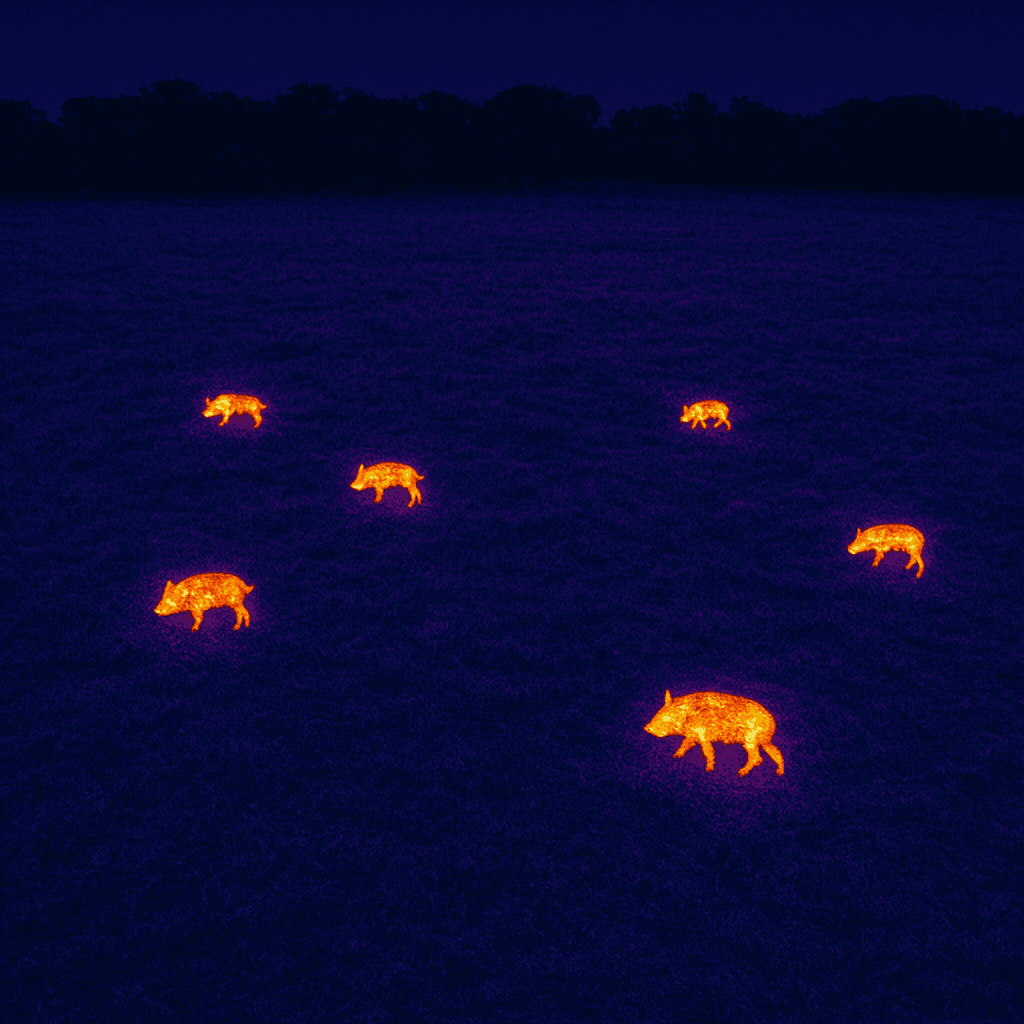
Wildlife & Hog Activity Mapping
Use night-time thermal flights to see where feral hogs and other game are actually moving—trails, bedding pockets, wallows, and crossings. Helps you place traps, feeders, blinds, and fencing where they’ll do the most good.
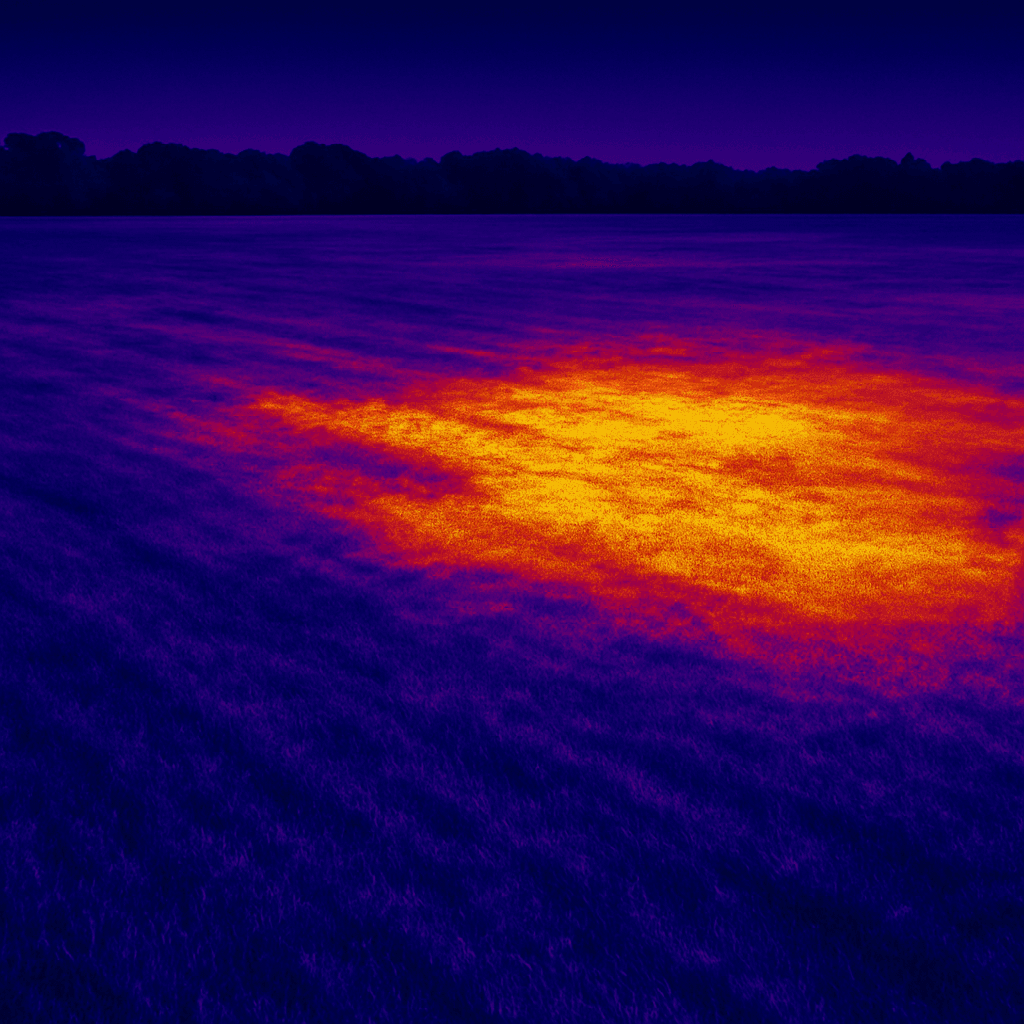
Pasture Stress & Drought Monitoring
Thermal overlays highlight hotter, likely stressed pasture versus cooler, healthier-looking grass spots where drought is likely hitting hardest. Identify over-grazed areas, dry lanes along fence lines and water gaps, and spots where drought is hitting hardest so you can rotate herds and target fertilizer or irrigation.
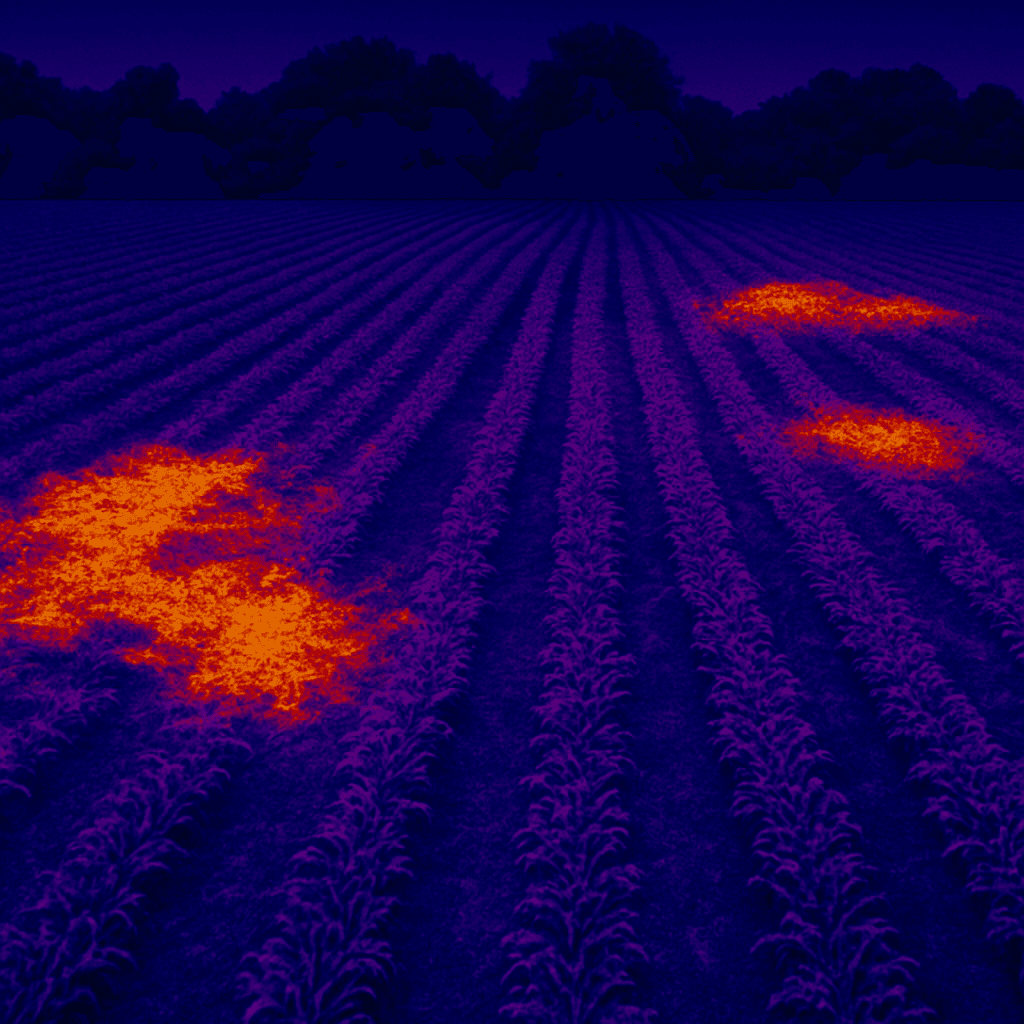
Crop, Feed & Field Damage Documentation
Document crop loss, damaged hay fields, or wasted feed from hog rooting and wildlife traffic. Thermal imaging highlights disturbed soil, damaged rows, and wet vs. dry areas, giving you visual evidence for leases, insurance, or damage claims.
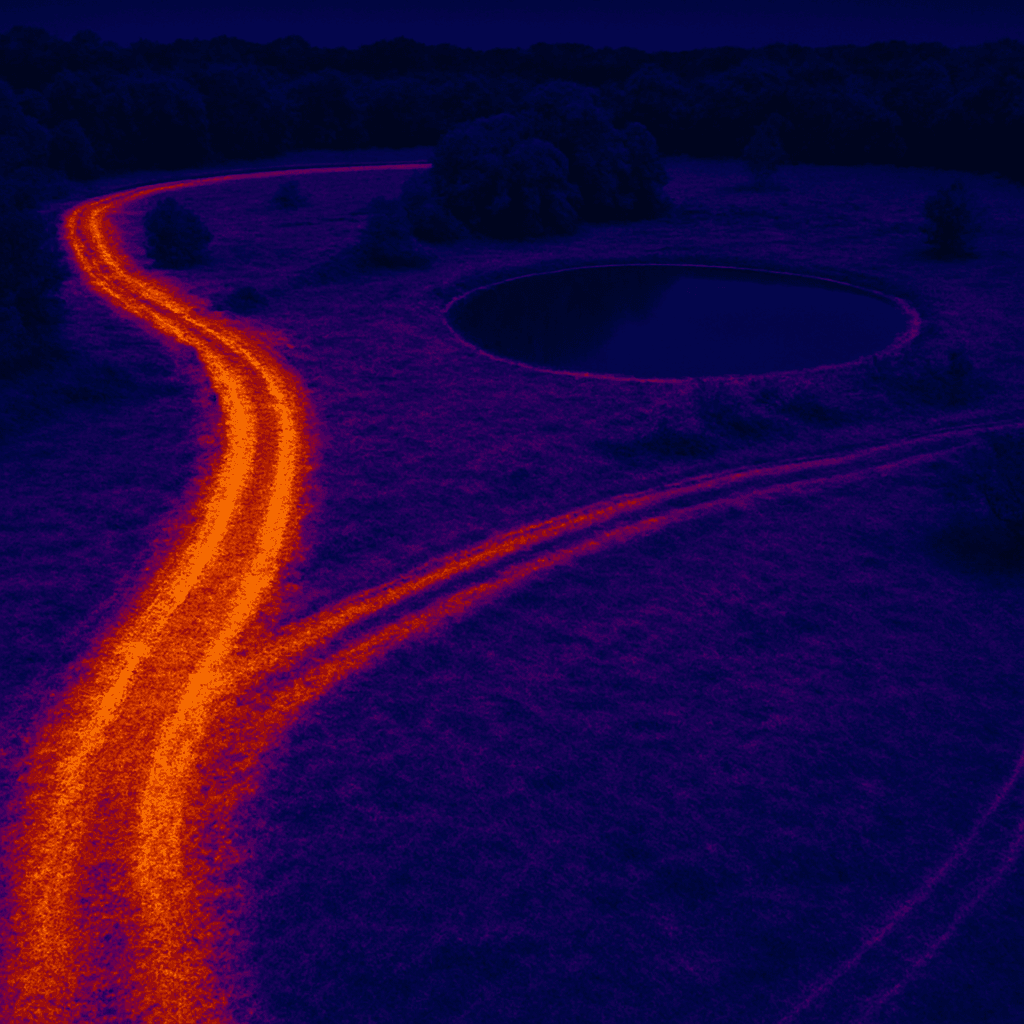
Lease Roads, Tanks & Ranch Infrastructure
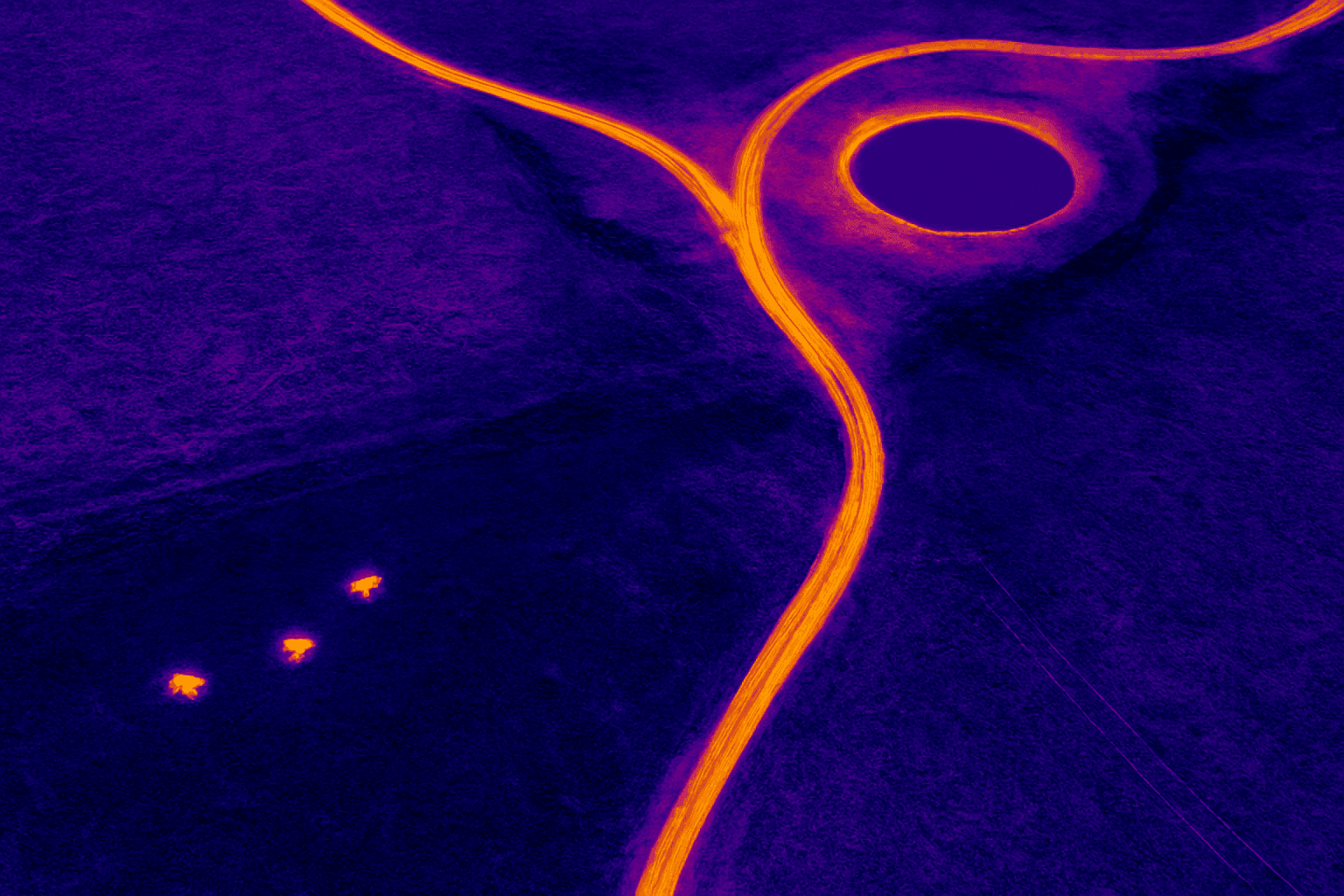
Scan lease roads, tanks, and pond edges to spot wash-outs, soft spots, leaking tanks, and areas holding unwanted water. Great for lease managers and outfitters who need a quick, neutral view of access routes and water assets across the property.
What Your Wildlife, Land & Field Scan Delivers
Every job comes with a working package built for landowners, ranch managers, and outfitters—not postcard photos. You get clear thermal views of where activity, stress, and damage are happening so you can decide what to fix, fence, or watch next.
- Thermal + RGB aerial image sets and map-style views of pastures, fields, roads, tanks, and key infrastructure.
- Wildlife & hog activity map showing trails, bedding pockets, crossings, and hot spots around feeders and blinds.
- Pasture stress & drought overlays highlighting dry lines, weak grass, broken water lines, and under-used shade or water.
- Crop, feed & field damage summary with marked areas of rooting, wallows, or trampled rows for documentation and planning.
- Roads, tanks & infrastructure notes including soft spots, wash-outs, suspected leaks, and problem access routes.
- Simple, claim- and contractor-friendly PDF report with key images, callouts, timestamps, and map views for your records.
Thermal Imaging FAQs
What can thermal wildlife & land scans actually detect?
Thermal scans clearly show:
Warm-blooded animals like feral hogs, deer, cattle, and predators moving across open or light cover.
Hot vs. cool vegetation (drought-stressed pasture, over-grazed areas, weak spots along fence lines or water gaps).
Wet vs. dry soil patterns, leaking ponds/tanks, and soft spots along ranch roads.
They cannot see through dense tree canopy, walls, or water, and Iwe won’t pretend they can.
How accurate are the locations and maps?
The Matrice 4T is an RTK-enabled platform, so your imagery and maps are tied to high-precision GNSS data. For ranch and field work, that means:
Sub-meter positioning of key features (trails, tanks, damaged rows, hog activity zones) when RTK corrections are available.
Clean overlays that line up well with your existing maps, fences, roads, and boundaries.
If someone is promising centimeter-grade survey output on every ranch job without control points, they’re overselling it. For management and documentation, what we deliver is more than accurate enough.
Can you fly at night, and is it safe for livestock and wildlife?
Yes. Under FAA Part 107, I can fly at night with the required anti-collision lighting and training in place.
Operationally:
Flights are planned to avoid low passes over barns and pens.
Altitudes and routes are chosen to minimize stress on cattle and wildlife.
We don’t “chase” animals; the goal is mapping patterns, not harassing game.
If you need a pure hunting/guide service, that’s not what this is. This is management and documentation.
What do I get after a wildlife / land scan?
Thermal + RGB aerial images of your pastures, fields, roads, tanks, and key problem areas.
A marked-up map calling out hog trails, bedding pockets, stressed pasture, damaged rows, leaks/soft spots, or access issues.
A simple PDF summary you can share with partners, outfitters, or insurance (if it relates to crop loss, road wash-outs, etc.).
Optional GIS-ready files (image tiles and basic shapefiles/KMZ) if you or your consultant use mapping software.
How often should I scan my ranch or fields?
How often should I scan my ranch or fields?
For most working properties:
Wildlife pressure / hog activity: 2–4 times a year (before/after major control efforts or planting).
Pasture & drought monitoring: at key stress windows (late summer, or during extended dry spells).
Crop damage & documentation: as soon as possible after a suspected event, while damage contrast is still visible.
The message: this is an ongoing management tool, not a one-time gimmick.